
Livestock Auction
The Loudoun County Fair Livestock Sale is a long-standing tradition that allows Loudoun’s 4-H youth to sell their market class project animals.
The Loudoun County Fair Livestock Sale is a long-standing tradition that allows Loudoun’s 4-H youth to sell their market class project animals. The sale is held in a live-bid, floor-auction type format. It is an opportunity for members of the community to purchase meat that is raised with the utmost care by a local 4-Hers. Buyers can be individuals, families, groups or businesses. To our long-time buyers, we thank you for your continued participation and support. We are confident that we will have some of the finest 4-H animals in all of Virginia at our Livestock Sale.
The Auction Program will be posted as soon as it is available on Friday, July 24th.
See the list of FAQs and information on Team Bidding below. Still have questions or you wish to receive a bidding package, email Auction@loudouncountyfair.com.
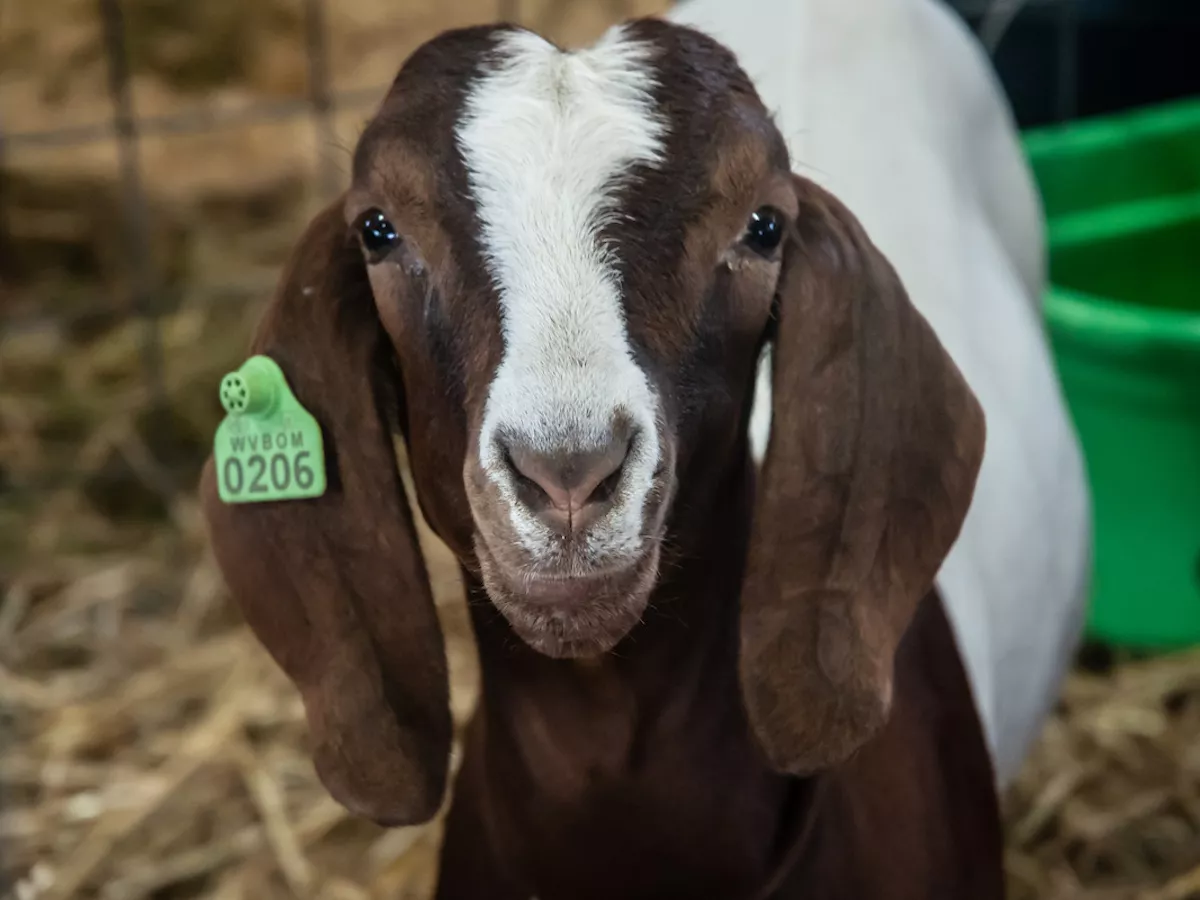
Livestock Auction 101
The culmination for the 4-H members in a livestock club is the Friday night livestock auction. It is the final judgment on the value of their animal. Many hours have been spent raising, training, fattening, and grooming for this night. The ultimate worth of a livestock animal is determined by the price received at the market, and the auction is the market for the 4-H members. All the animals sold at the auction are of high quality, each being raised with dedicated care and attention. The purchase of an animal at the auction is a win-win situation. The 4-H member is learning life and business skills, and the purchaser is getting excellent cuts of meat. Below is a summary of the auction process followed by some frequently asked questions to help new buyers get started.
How does it work?
The auction is held on Friday night of Fair week. If this is your first time bidding at the Fair, you can register and receive a bidder packet at the door prior to 5:00PM. In your packet will be a paddle with a number on it and a catalog showing all the animals being sold with the lot numbers, grades, weights and sellers’ names. As the animals are brought into the ring, the auctioneer will be saying the price of the animal per pound. To bid on an animal, hold up your paddle until one of the auctioneers recognizes your bid. If you are the winning bidder, you will be asked to designate where the animal will be shipped for processing when you pay for your purchase. You will have the choice of several processing plants (choices are listed in the catalog). At the conclusion of the Fair, the animal will be shipped to the processor. You should call the processor on Monday to discuss the types of cuts you would like and how you would like them to be prepared. When the meat is ready, you will get a call from the processor to pick it up.
Frequently Asked Questions
What is the auctioneer saying?
The auctioneer is saying the price of the animal per pound. As a rule, the smaller the breed of animal, the higher the average price per pound (i.e., a chicken will have a higher price per pound than a hog).
When and how do I pay?
Payment is due that night by cash, check or card. A service fee applies to card purchases.
In the catalog, what does ‘lot’ mean?
During the Fair’s livestock shows, the animals are compared to each other and ranked in order of conformation. The closer the animal conformed to certain accepted standards, the lower the lot number is. The top two animals in each of the species are the Grand Champion and Reserve Grand Champion. They are given the lowest lot numbers.
Is there a difference between first place and the last place animal?
All the animals sold are high quality, each being raised with the utmost care and attention.
How do I get the animal home?
If you purchased an animal and requested it to be processed, it will be shipped directly from the fairgrounds to the processing plant that you specified. For the other animals, either after the sale or the next day you can talk to the seller to determine the best way to transport the animal home.
Where does the money go?
The entire purchase amount minus a small administrative fee for auction expenses, and advertising goes back to the 4-H member. The funds are typically used to purchase their next year’s project animal and/or to pay future costs such as feed, vet bills, and supplies.
Is there a difference in taste?
There is a notable difference between auction meat and store-bought meat. As a result of being home-raised, the meat from the animals at auction is often much tastier.
I don’t know anything about ‘types of cuts’.
Once you purchase the animal, the processor will be more than glad to help you decide how to ‘dress’ it. Call them on the Monday after the sale to get your options.
I want beef but I can’t afford a whole steer.
It is very common for two or more families to purchase one animal. Talk to the processor to have the meat divided evenly.
How do I store all that meat?
If you don’t have a freezer at home that is large enough to store all of the meat, some of the processors have meat lockers that can be rented for a weekly or monthly fee.
How do I determine which processing plant to use?
Check for a location near your home. Make sure the processor will ‘dress’ what you purchased. If you need a meat locker, check that there is one available at the processing plant. If you plan to resell the meat commercially, the processor must have state inspections.
Is the cost of processing the meat included in the auction?
No, the processing costs are separate. Expect to pay (approximately):
- Steer: $95-105 + $0.95-1.20/lb.
- Hog: $65-85 + $0.95-1.00/lb.
- Lamb: $100-150
- Goat: $100-150
What percent of the animal is actual meat?
Approx. 62% of a steer, 57% of a hog, and 50% of a lamb.
- 1250 lb steer yields approx. 775 lbs of meat
- 250 lb hog yields approx. 145 lbs of meat.
- 125 lb lamb yields approx. 62.5 lbs of meat.
What would this meat cost in a grocery store?
Once the animal is processed, if you purchased the same cuts of meat in a food store, you would pay:
- 775 lbs from a steer would average about $7.50/lb
- 250 lbs from a hog would average about $5.75/lb
- 125 lbs from a lamb would average about $15.00/lb
Do rabbits, chickens, and goats go to processing plants?
Rabbits, chickens and other poultry generally do not go to the processor. The purchaser usually takes them home or donates them back to the seller. About half of the goats are sent for processing and about half of them are kept as pets or are donated back to the seller.
Can a business purchase an animal?
Absolutely! Every year the auction has purchases by banks, construction companies, grocery stores, insurance companies, home builders, and real estate agencies just to name a few. We welcome and encourage businesses to bid.
What does a business do with the animals?
Businesses have many options once they purchase an animal. These include but are not limited to:
- Distribute the processed meat to employees.
- Have the meat processed and sent to a caterer for a company picnic.
- Have the meat processed and sent to a charitable organization (i.e., homeless shelter, food bank).
- Send the animal to the local livestock exchange with the proceeds returned to the business or sent to a charitable organization.
- Donate the animal back to the seller.
Is it tax deductible?
Consult your tax advisor.
I didn’t win any bids, but I still want to buy. What can I do?
After the auction, talk to a 4-H leader or someone on the Livestock Sale Committee to see if more animals are available. Often a 4-H member will bring two or more animals to show during the week of the Fair but can only enter one of that particular species in the sale. These additional animals are often available for private sale.
I want to contribute but I don’t want meat.
Below are a few suggestions:
- Send the animal to the local livestock exchange with the proceeds sent to you or a charitable organization.
- Have the meat processed and sent to a charitable organization (i.e., homeless shelter, food bank).
- Donate the animal back to the seller.
- Give the treasurer a check and mark it ‘donation’.
What is the livestock exchange?
The livestock exchange is where commercial livestock is purchased and sold. When an animal is sent from the auction, the animal is sold at that day’s price per pound (market value) and the exchange sends a check to the seller minus a service fee. The Loudoun County Fair sends most of the exchange animals to the Fauquier Livestock Exchange in Marshall, VA.
What is team bidding?
- Don’t need a whole steer or hog? Team up with some of your friends, family, coworkers, or business partners. Get a group of 2-4 individuals or businesses together and designate one person as the team leader. This person will be the point of contact for the processor. Submit a team bidding form by July 17th. You will receive a team bidding number and paddle on the night of the auction. Discuss your budget ahead of time and how you will divide up the animal.
TEAM BIDDING FORM
what fair attendees say

Driving up to this fairground you have no idea what to expect because you’re driving on a wooded road and bam suddenly there a fairground over the hill nestled among the trees! And tmit was a great fair! There’s was a petting zoo and multiple magic shows! Tons of 4H animals and a pig scramble for kids! And of course a ton of carnival rides, totally worth getting the wristband for unlimited rides
-Benjamin Brown
Well organized, easy parking even
with a trailer. Staff was great and the
cleanest porta potty I’ve ever seen.
-Tommy Allen Taylor
Buy parking and tickets ahead of time, if you have an iPhone they work with Apple Wallet.
There’s ATMs but everywhere takes credit cards minus the ticket stand by the entrance by the kiddy rides. If you have little ones bring a wagon or something the walk from the car
back after a day of rides is tough for the little ones. Get there early if you can 🙂
-Amir Zonozi